
June 15, 2026
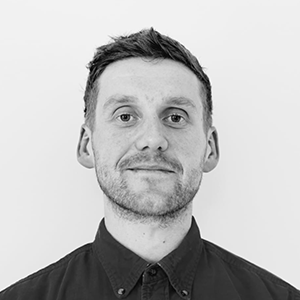
Profile photo of Dr Dougie Squire.
Where did you grow up, and how did you come to be part of the ACCESS-NRI team?
I grew up in Dunedin, Aotearoa (New Zealand). After completing my undergraduate degree in Mechanical Engineering in Christchurch, I moved to Melbourne to do a PhD studying turbulent boundary layers in a giant wind tunnel. After that, I spent a short stint as a postdoc trying (and failing) to take measurements of the atmospheric surface layer over Lake Eyre, before joining CSIRO in Hobart.
While at CSIRO, I attended a presentation outlining the very early plans for what would eventually become ACCESS-NRI. When the organisation was officially formed, and I saw who was already involved, I jumped at the opportunity to apply.
Tell us a bit about your career before joining ACCESS-NRI.
Most of my work at CSIRO was on the Decadal Climate Forecast Project. I was part of a large team that developed a system for large-ensemble, multi-year to decadal climate forecasts using the Geophysical Fluid Dynamics Laboratory’s (GFDL’s) CM2.1 coupled climate model and state-of-the-art ensemble data assimilation. One of my interests was the verification of this system and understanding the limitations and common pitfalls of some of the methods we use to assess forecast skill.
During this time, I became involved in the Pangeo community, which brings together people interested in open, reproducible and scalable geoscience. Through that community, I started contributing to open-source software and gradually realised that writing software was the part of the job I enjoyed most.
What do you do at ACCESS-NRI, and what excites you about this work?
I’m part of the Ocean Model Team at ACCESS-NRI. Much of my time is spent developing the coupled ocean/sea-ice/wave model ACCESS-OM3, particularly the ocean biogeochemistry model WOMBAT, which we develop in collaboration with CSIRO.
What excites me most about my work is the combination of challenging technical problems and the opportunity to work with talented and collaborative people. The work is very varied, and I’m constantly learning new things, which is something I really enjoy.
What do you like to do outside of work?
I have two young kids (aged two and four) that keep me pretty busy. When I get the chance, I enjoy riding bikes of all kinds, trail running and making pottery in my shed.