
September 17, 2026
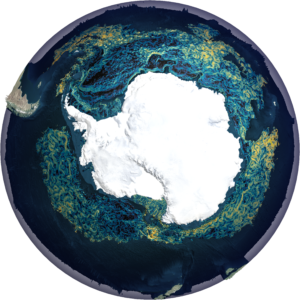
Visualisation of Antarctica. Credit: Owen Kaluza, ACCESS-NRI
In short: ACCESS-NRI has released four key components of the Ice Sheet and Sea-level System Model (ISSM) workflow to the Australian research community, marking the first step toward integrating a dynamic ice-sheet model into the ACCESS climate suite.
Ice sheets are fundamental components of the Earth system. Antarctica and Greenland, the two ice sheets currently on Earth, don’t just affect their own regions: what happens on these vast masses of land ice influences weather, climate, society and the environment around the planet. Ice sheets are the largest drivers of global sea-level change on centennial and longer timescales, and they play a fundamental role in regulating incoming solar radiation and ocean and atmosphere circulation.
“This is the first attempt at integrating a dynamic ice sheet model into the ACCESS climate suite. Until now, researchers have used a static proxy to approximate the impact of ice sheets, and work has typically focused on individual regions rather than the whole of Antarctica. Now with ISSM we’ll be able to do that,” says Dr Mike Tetley, Team Lead of the Ice Sheet Modelling team at Australia’s climate simulator, ACCESS-NRI.
A dynamic ice sheet model captures the two-way interaction between ice, ocean and atmosphere. Ice sheets contribute freshwater to the oceans, which affects temperature, salinity and circulation, while the reflective surface of the ice also influences the atmosphere. In turn, changes in the ocean and atmosphere feed back into ice sheet evolution.
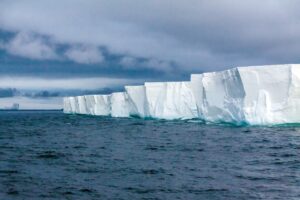
Antarctica ice sheet. Credit: Pixabay
“If we want to understand how the climate might change over the coming centuries, and the impact of these changes on Earth systems, we need to accurately model the interactions between the ice sheets and the ocean and atmosphere. Ice sheet modelling is a major area of research at Monash University, the University of Tasmania (UTAS) and the Australian Antarctic Division (AAD) and is also used by ocean modellers around the country,” says Professor Nerilie Abram, Chief Scientist, AAD.
Developed in close consultation between ACCESS-NRI and the cryospheric research community, this end-to-end workflow, from creating a model to getting results, includes four new components:
- ACCESS-ISSM: an ACCESS-NRI-supported deployment of the ISSM code for Australian researchers on the NCI Gadi, providing a stable, open and reproducible model environment. This enables the community to all work from the same stable and supported ISSM version rather than a patchwork of local builds.
- pyISSM: an ISSM Python API providing researchers with a modelling environment to configure, run and interact with their ISSM models entirely in Python on NCI Gadi.
- Cryosphere Community Data Pool (CCD): a joint data-sharing and discovery project between ACCESS-NRI and the Cryospheric Sciences Community Working Group, providing an open-access data resource for the Australian community.
- ccdtools: a Python package to query, load and interact with data from the CCD.

Antarctica. Credit: Derek Oyen, Unsplash
“These releases allow researchers to start using the ISSM model workflow straight away. Because it runs on Australian infrastructure like the supercomputer Gadi at the National Computational Infrastructure (NCI), the Australian modelling community can run the same model and datasets on the same system, which simplifies the whole process, as the code does a lot of the work for them. Our deployment of ISSM is optimised for our Australian systems, so makes running and processing ISSM simpler and more accessible to the community,” says Dr Felicity McCormack, co-developer of the model and Chief Investigator on the ARC Special Research Initiative Securing Antarctica’s Environmental Future (SAEF), Monash University.
ACCESS-NRI aims to grow community adoption of ISSM across Australia by supporting modelling and data discovery, developing training materials, organising workshops, and supporting the Cryospheric Sciences ACCESS Community Working Group.
“We want the Australian cryospheric science community to grow, with more accessible, reliable and easier-to-use tools, so people can spend more time doing science instead of fighting with code,” says Dr Tetley.
Looking ahead, the ISM team have begun work on supporting sea-level fingerprint modelling to improve decadal-to centennial-scale projections of global and regional sea level, and the development of ACCESS-AIS3 (Antarctic Ice Sheet version 3), a whole Antarctic community ice sheet model configuration.
This work is a collaboration between ACCESS-NRI, the Cryospheric Sciences Working Group (CSWG), and ISSM core developers at NASA’s Jet Propulsion Laboratory and Darthmouth College in the United States.
Thanks to everyone who has contributed to testing and developing the model, including the Monash University Securing Antarctica’s Environmental Future (SAFE) initiative, the Australian Antarctic Program (AAP) and the Institute for Marine and Antarctic Studies (IMAS) at the University of Tasmania.
ACCESS-NRI modelling relies on computational and data resources operated by Australia’s National Computational Infrastructure (NCI), located at the Australian National University. ACCESS-NRI and NCI are enabled by the Australian Government, Department of Education, through the National Collaborative Research Infrastructure Strategy (NCRIS).
Would you like to use these new model configuration, data and tools? See its release information:
Information on how to join the Cryospheric Sciences Working Group can be found on the ACCESS Hive Forum.