
November 4, 2025
How can climate models be used for ecology?
A recent paper published in Marine Ecology Progress Series demonstrates how the ocean-sea ice model ACCESS-OM2 can be used to inform a species distribution model for crabeater seals in East Antarctica.
Read the article on the publisher’s website
I spoke with lead author Denisse Fierro-Arcos from the Institute for Marine and Antarctic Studies at the University of Tasmania about the research.
Species distribution models
‘A species distribution model is essentially a way to understand how a species that you are interested in relates to the physical environment,’ Denisse explains. ‘In the case of crabeater seals, we found that they like areas with a medium concentration of sea ice.’
Much like for physical climate and weather models, there are multiple algorithms and approaches for species distribution models, each with their own biases. For this reason, the research compared multiple algorithms and an ensemble mean.
-
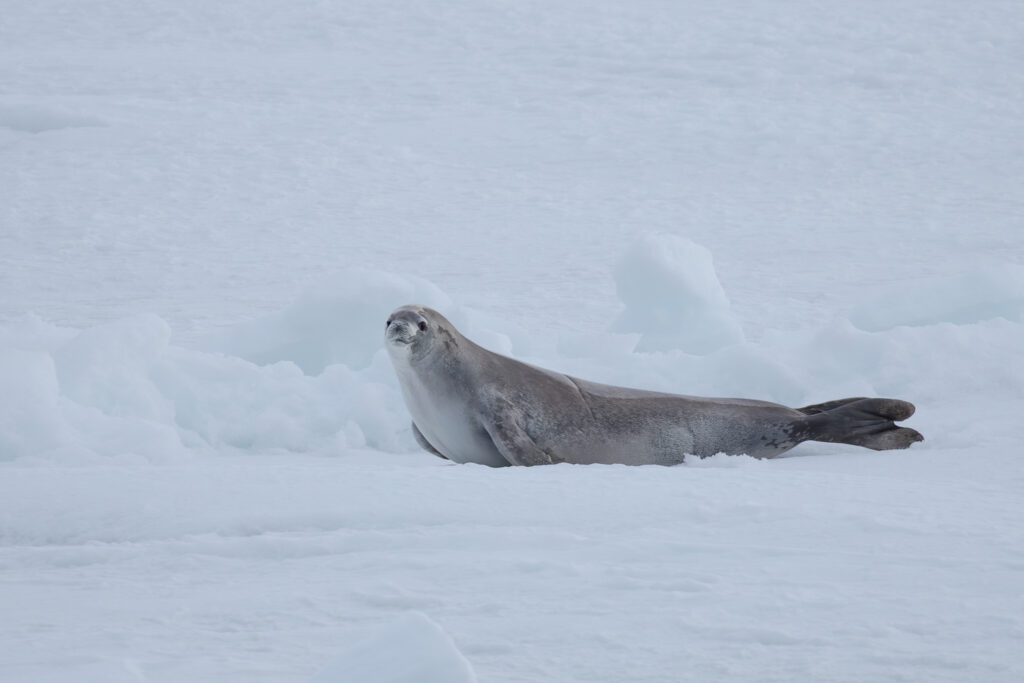
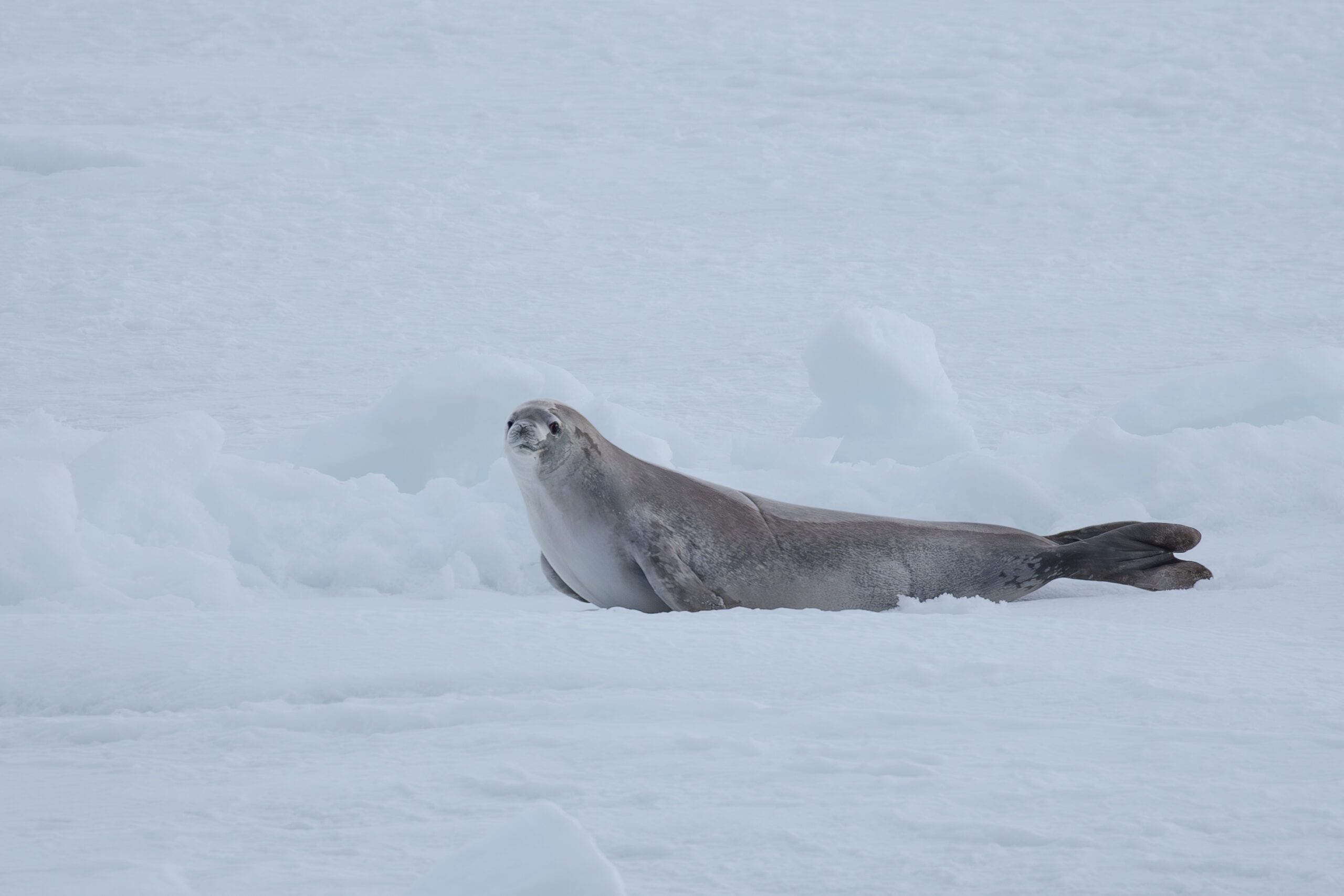
- Crabeater seal on the ice. Photo credit: Ben Viola (IMAS)
-
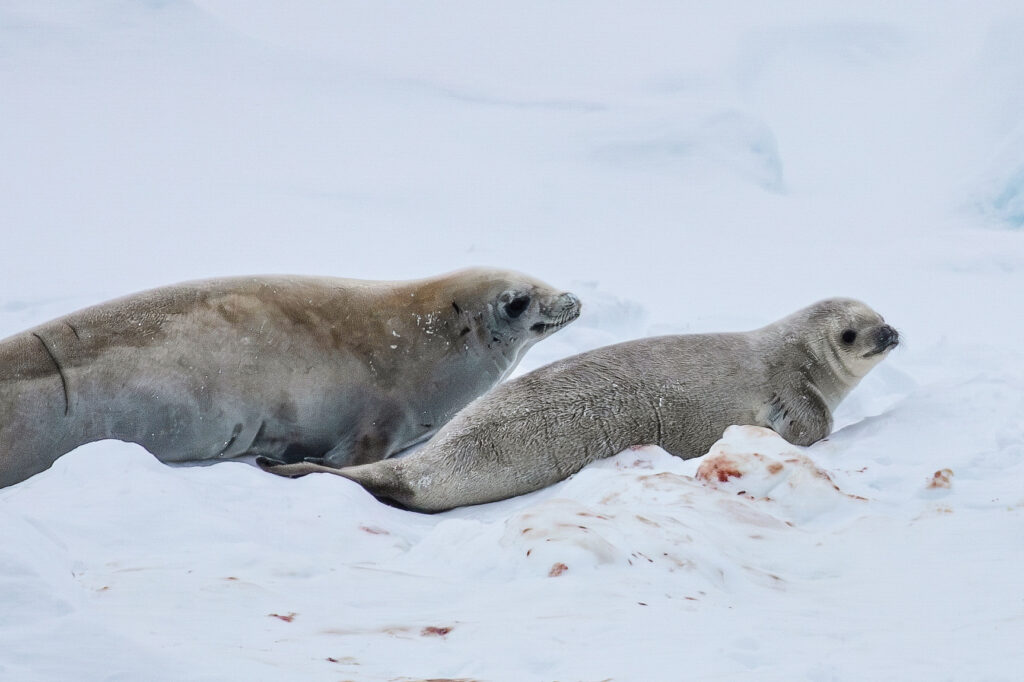
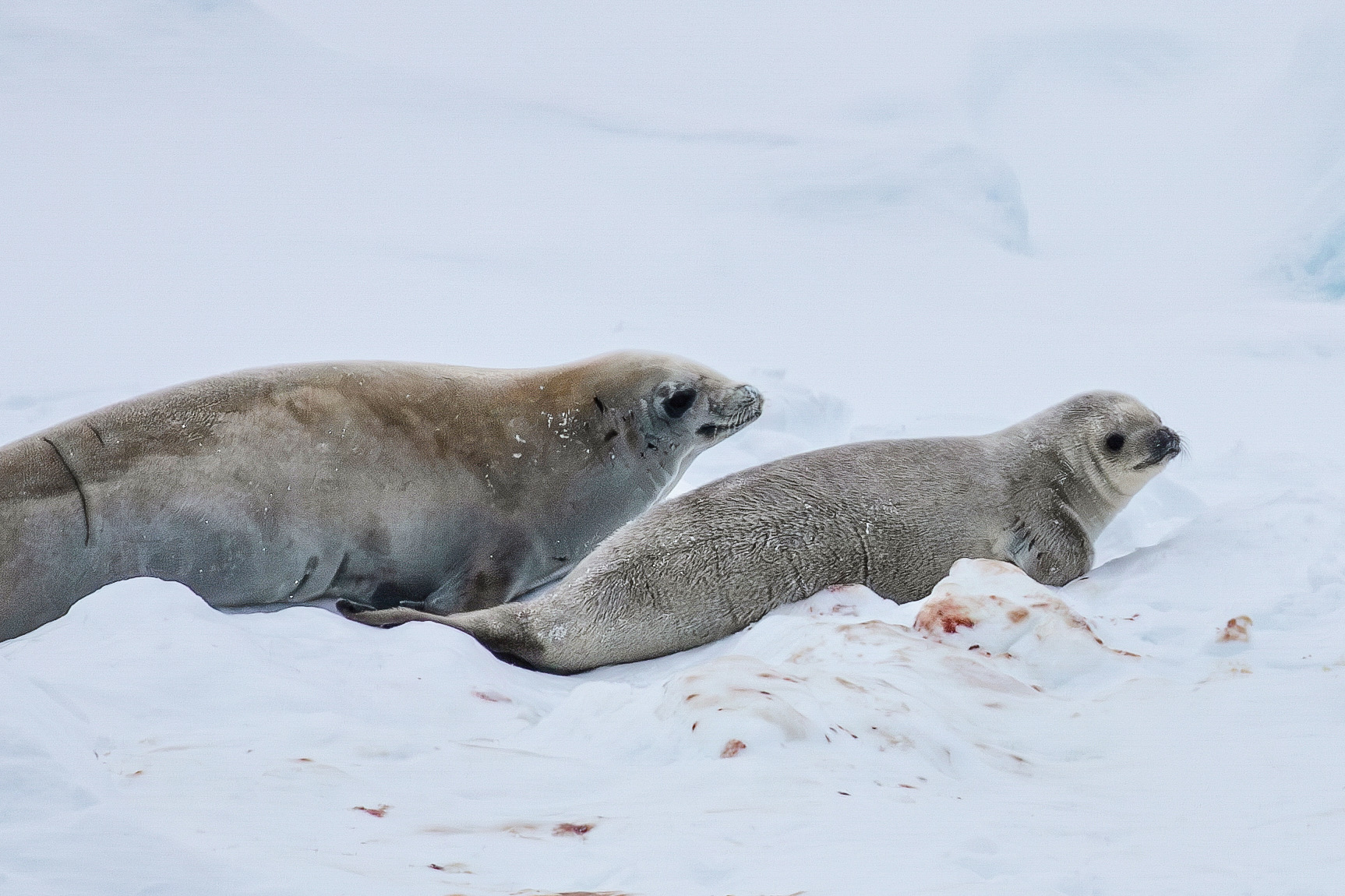
- An adult and juvenile crabeater seal on the ice. Photo credit: Ben Viola (IMAS)
Challenges in creating a species distribution model for crabeater seals
According to Denisse, one of the biggest challenges in areas like the Southern Ocean is the data about the animals themselves:
There are campaigns to collect data, but they are very limited in scope in terms of the area that they cover. These campaigns are often only be done for a couple of seasons, and there’s no continuity. This means we don’t really know what’s happening to that population of animals. Different campaigns also use slightly different methods to observe the animals, which is not ideal.
The other main challenge is the resolution of the environmental data used. The data needs to be detailed enough to capture the features that are important for biology. For example, features like eddies and upwelling can drive primary production and promote the presence of species like the crabeater seal.
Using ACCESS-OM2
The ocean-sea ice model ACCESS-OM2 was used to inform the environmental variables for the research. Denisse outlined the purpose of the model in this context:
It allows us to see the variables that we know are important for animals; sea ice is a massive one. We look at the sea ice concentration and extent close to the observations and compare these to remote sensed data. It turns out that ACCESS-OM2 is a lot better than most other models. But the seasonality of the sea ice is not great, so we couldn’t use that information.
Once the model is determined to provide a good representation of the environment in the Southern Ocean, it can be used to predict where the crabeater seals are likely to be present.
Research outcomes
This research provides a framework of how to go about selecting a model that is appropriate to answer an ecological question. In other words, so ecologists don’t just choose a model based on availability, or the fact that someone else used it.
‘It was really important to me to not only release the publication, but also all the code,’ emphasises Denisse. ‘This means people can use it or make it better, and at least they have a blueprint of how to go about it.’
Denisse also identified that many ecologists are aware that ocean models like ACCESS-OM2 are available, but don’t know how to access them or evaluate them. She hopes that this research addresses that problem.
Overall, the research doesn’t just inform not just where the crabeater seals are. It also can be used to identify where there is disagreement between the different species distribution algorithms.
Views for future research
Denisse would like to see the results of the species distribution models further validated:
The models say that the crabeater seals are likely found up to 500km away from the sea ice, which is something that we haven’t seen before. That doesn’t mean that it doesn’t happen though. Often the seals are observed when both the scientists and the seals are on the ice; it’s harder to see them when they’re in the water.
Future research also has the ability look beyond how the crabeater seals relate to their environment historically.
‘It’s not perfect, but we could get an indication of what’s likely to happen to these animals under different climate scenarios, which is critical,’ Denisse asserted.